Nintendo Switch 2 Review: The Hybrid Evolution We Needed
Published on 2026-02-27 11:55 by Frugle Me (Last updated: 2026-02-27 11:55)
Article Content
Nintendo Switch 2 Review: The Hybrid Evolution We Needed
After months of anticipation and "Direct" teases, the Nintendo Switch 2 is finally here. As of February 2026, we’ve had enough time with the hardware to see if it truly lives up to the massive legacy of its predecessor. Spoiler alert: it’s the most significant jump in Nintendo hardware since the transition from the GameCube to the Wii.
1. Hardware & Design: Sleeker and More Magnetic
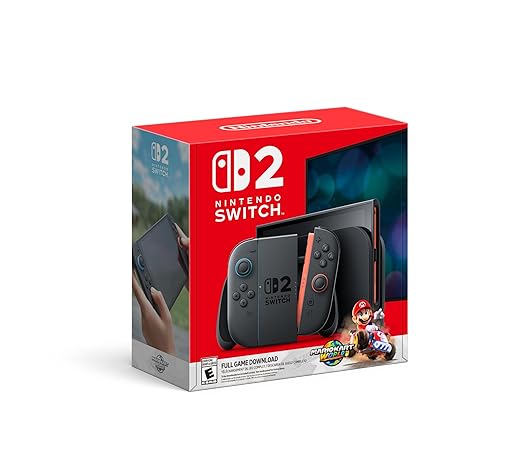
The first thing you’ll notice is the size. The Switch 2 features a larger 7.9-inch LCD screen (with an OLED model rumored for later). While some were disappointed it didn't launch with OLED, the new 1080p panel supports a 120Hz refresh rate, making everything from the UI to gameplay feel incredibly fluid.
Key Design Changes:
* Magnetic Joy-Cons: The sliding rail is gone. The new "Joy-Con 2" controllers snap into place using high-strength magnets, which feels premium and eliminates the "wobble" found on older models.
* Dual USB-C Ports: There are now ports on both the top and bottom, allowing for much easier charging while playing in tabletop mode.
* The Kickstand: Borrowing from the Switch OLED, the kickstand is a full-width, adjustable hinge that is rock-solid.
2. Technical Specs: The Power of DLSS
Under the hood, Nintendo stuck with NVIDIA, using a custom Tegra T239 chip based on the Ampere architecture. This puts the Switch 2's raw power roughly on par with a portable PS4 Pro, but with a secret weapon: DLSS (Deep Learning Super Sampling).
- RAM: A massive jump to 12GB of LPDDR5X RAM, which drastically reduces loading times.
- Storage: The base model now comes with 256GB of internal storage, and it finally supports microSD Express for lightning-fast external loading.
- Docked Mode: When docked, the console can output at 4K resolution via upscaling, maintaining steady 60fps in demanding titles like Mario Kart World.
3. Backward Compatibility: Your Library is Safe
Perhaps the biggest win for fans is full backward compatibility. The Switch 2 plays almost all original Switch cartridges and digital titles.
* "Switch 2 Editions": Many older hits like The Legend of Zelda: Breath of the Wild have received "Enhancement Packs." These aren't just resolution bumps; they often add 60fps modes or improved textures that take advantage of the new 12GB of RAM.
4. New Features: GameChat and More
Nintendo is finally getting serious about social features. The new GameChat button on the right Joy-Con allows for seamless voice chat and screen sharing without needing a separate mobile app. There is even a built-in camera on the main unit for video calls and specific AR-based games.
5. Performance and Battery Life
- Battery: The 5220 mAh battery provides roughly 3 to 6 hours of play depending on the game. While not a massive increase, it’s impressive considering the jump in graphical fidelity.
- Charging: It now supports 60W fast charging, getting you from 0% to 50% in about 30 minutes.
The Verdict: Should You Upgrade?
At $449.99, the Nintendo Switch 2 is a premium jump in price, but the value is undeniable. If you are a fan of the original hybrid concept but were tired of the 720p blurry textures and long loading screens, this is a mandatory upgrade.
Pros:
* Gorgeous 120Hz 1080p handheld display.
* Magnetic Joy-Cons feel much more durable.
* Flawless backward compatibility with the original library.
* DLSS makes 4K gaming on a Nintendo console a reality.
Cons:
* Launch model uses LCD instead of OLED.
* Battery life remains "fine" but not revolutionary.
* $450 is a steep entry point for a Nintendo handheld.
Final Score: 9/10

Related Deals

Comments (0)
Want to join the conversation?
Please log in to add a comment.