Spotting the Crown: How to Verify a Real Rolex
Published on 2026-03-06 22:47 by Frugle Me (Last updated: 2026-03-17 00:50)
Article Content
Spotting the Crown: How to Verify a Real Rolex
Rolex is the most recognized luxury watch brand in the world, and unfortunately, the most counterfeited. While "super-clones" are becoming harder to spot, genuine Rolex watches adhere to incredibly high manufacturing standards that fakes rarely match.
Here is how to tell if a Rolex is the real deal.
1. The "Sweep" of the Seconds Hand
Rolex watches are mechanical (with very rare vintage quartz exceptions).
* The Movement: The seconds hand should glide smoothly around the dial.
* The Tick: If the hand "ticks" once per second, it is a low-end quartz fake.
* The Nuance: While it looks perfectly smooth, it actually "ticks" about 8 times per second. If you look extremely closely and see a jerky, stuttering motion, it may be a counterfeit.
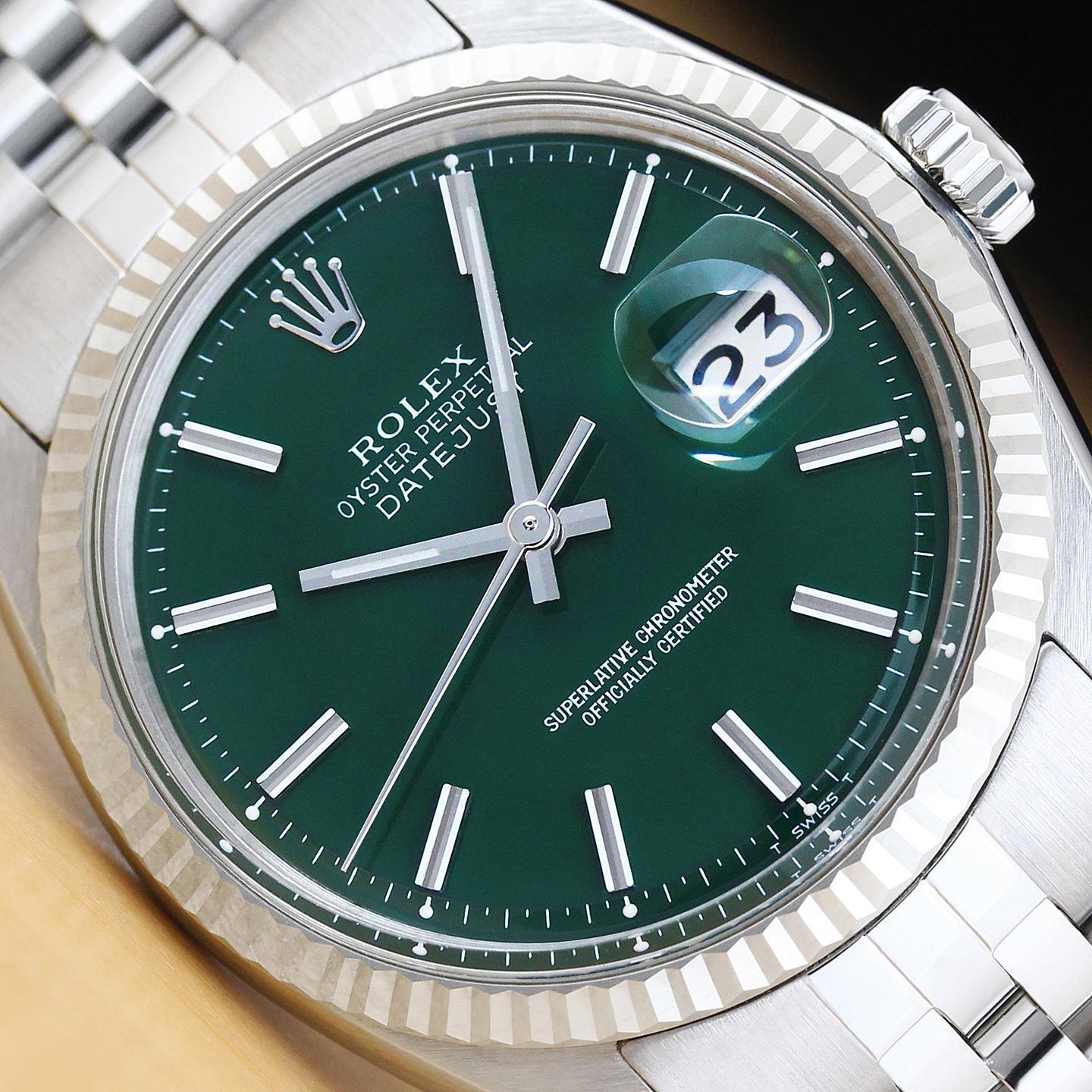
2. The Cyclops Lens (Date Window)
The "Cyclops" is the magnifying lens over the date. This is one of the hardest parts for counterfeiters to get right.
* Magnification: A real Rolex Cyclops magnifies the date 2.5 times. On many fakes, the magnification is weak (only 1.5x), making the date look small and hard to read.
* Centering: The date should be perfectly centered in the window.
* The "Jump": When the time reaches midnight, the date should snap instantly to the next day, not slowly drift or rotate.
3. The Serial and Model Numbers
Rolex engraves these numbers with deep, precise lines.
* Location: On modern models, the serial number is engraved on the rehaut (the inner rim between the dial and the crystal) at the 6 o'clock position. On older models, it is found between the "lugs" (where the bracelet meets the case).
* The Quality: Genuine engravings are fine and glow in the light like a diamond-cut edge. Fakes are often acid-etched, appearing "sandy" or faint.
4. The Weight
Rolex uses only high-grade materials: 904L stainless steel, 18k gold, or 950 platinum.
* The Feel: A real Rolex will feel substantial and "solid."
* The Clasp: Open the clasp and feel the edges. They should be smooth and polished. If it feels like thin, sharp, or flimsy stamped metal, it is likely a fake.
5. The Caseback
With very few historical exceptions (like the Sea-Dweller or rare vintage models), Rolex does not have engraved casebacks.
* Clear Casebacks: Rolex does not use "exhibition" (clear) casebacks on their standard professional or classic models. If you can see the engine, it’s almost certainly fake.
* Plain Steel: A genuine caseback should be smooth, polished, and free of logos, slogans, or gold hallmarks.
6. The Micro-Etched Crown
Since 2002, Rolex has etched a tiny "coronet" (crown logo) into the sapphire crystal.
* How to find it: Look at the 6 o'clock position on the crystal. It is so small it is almost invisible to the naked eye.
* The Tool: Use a flashlight at an angle or a jeweler’s loupe. If the etched crown is large, easy to see, or made of distinct white dots, it is a fake.
7. Waterproofness and Sound
- The "Ring": Hold the watch to your ear. A real Rolex movement is relatively quiet. If you hear a loud, fast "ticking" sound, it’s likely a cheap movement.
- Water: Every Rolex (except the Cellini) is built with an Oyster case, meaning it is hermetically sealed. If there is any fogging or moisture under the glass after a quick dip, it is not a genuine Rolex.
Pro Tip: When in Doubt, "Buy the Seller"
The best way to guarantee authenticity is to buy from an Authorized Dealer (AD) or a reputable pre-owned specialist who provides a guarantee. If the deal seems too good to be true, it always is.
Related Deals

Rolex Day Date 1803 Champagne Dial 18K Yellow Gold Mens Watch Box Papers
15223.95 8% off
Posted by Frugle
Comments (0)
Want to join the conversation?
Please log in to add a comment.